


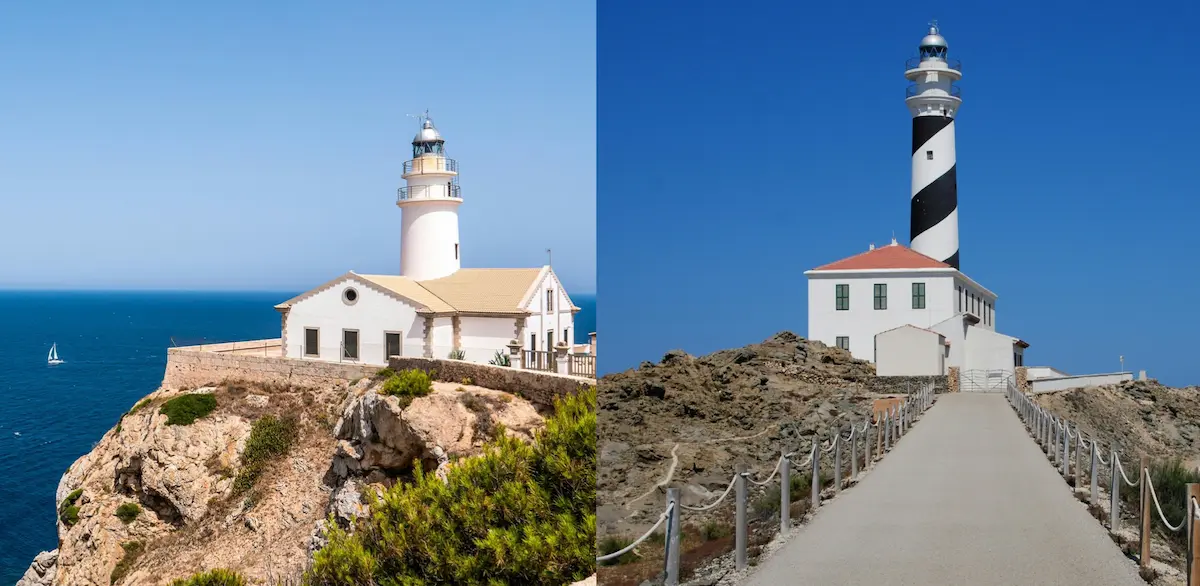
Deciding where your luxury escape should unfold is a sweet worry to have, and at this point, a very important question arises: Mallorca or Menorca? Both belong to the Balearic Islands, yet they offer two very different versions of indulgence. Mallorca is vibrant and polished, filled with fine dining, art, and a dynamic coastal lifestyle, while Menorca is calm and discreet, shaped by open landscapes, slow rhythms, and the privacy of a small island.
There are a few factors that make all the difference when deciding, such as the atmosphere, accessibility, lifestyle, and your desired experience. So by the end of this article, you’ll know which island suits your travel style and of course, where to explore our curated luxury villas in the Balearic Islands.
The Character of Each Island
Mallorca: Mediterranean Sophistication
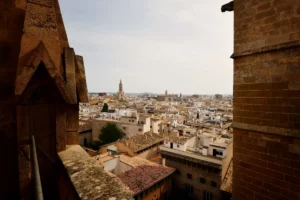
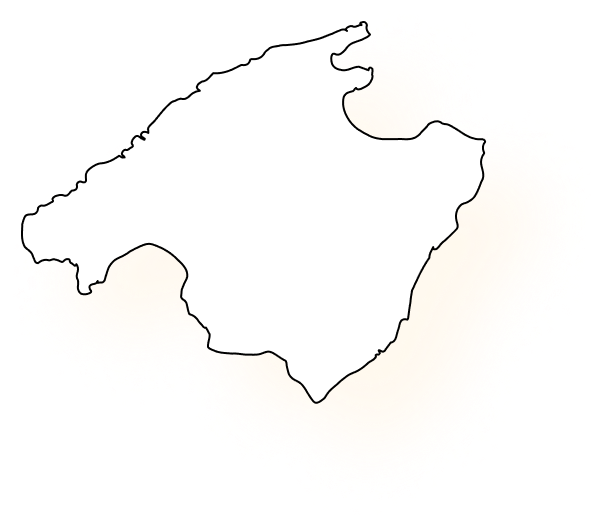
Mallorca might be the biggest of Spain’s Balearic Islands, but it doesn’t lean on size alone. With nearly 940,000 people spread across 3,640 km², it has the energy of a lived-in place and the ease of a Mediterranean escape. You get real variety here, too. About a fifth of the island is protected under Natura 2000, and the coastline lines up almost 300 officially recognized beaches, which gives you plenty of room to pick your pace. Palma, the capital, ties everything together with a mix of historic streets, standout restaurants, polished marinas, and boutique design hotels. It’s the kind of destination that speaks to travelers who like a cosmopolitan beat and Mediterranean style, all kept relaxed and unhurried.
Menorca: Discreet Elegance
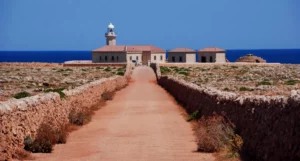
Menorca covers about 696 km² and has a population of around 102,000, which gives it an intimate, unhurried feel. The island earned its UNESCO Biosphere Reserve status in 1993, and today about 43 percent of its land is protected. That focus on preservation sets the tone, whether you’re walking across quiet landscapes or choosing between its 75 cataloged beaches. Villas here sit naturally within the scenery, and fine dining often leans on ingredients sourced nearby. Menorca attracts travelers who want privacy, local flavor, and a level of quiet that signals real exclusivity.
For Foodies
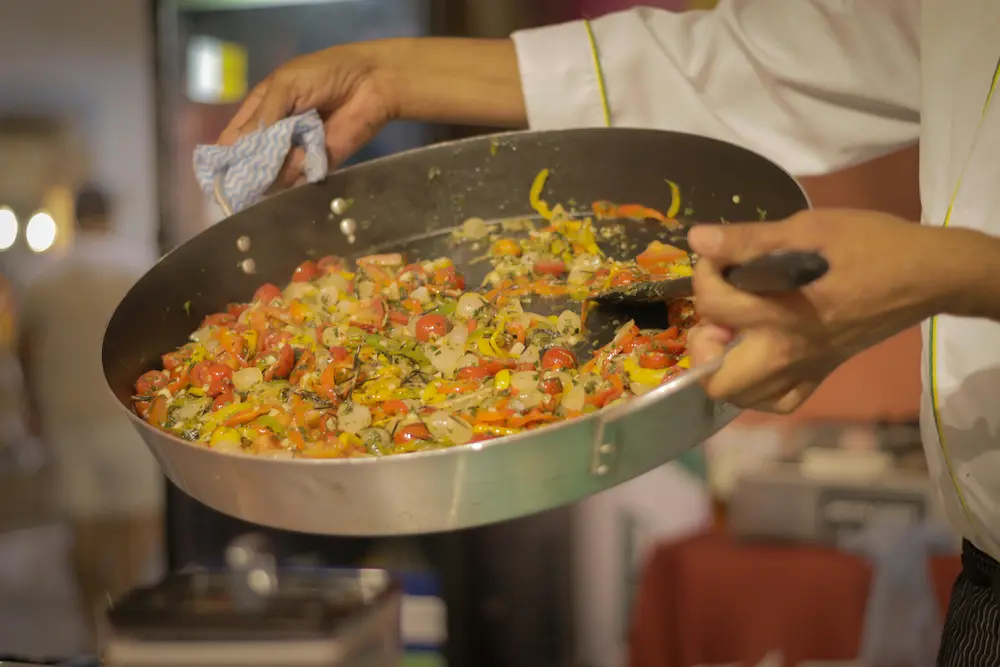
Mallorca: Michelin-starred dining and cosmopolitan cuisine
Mallorca’s food scene pairs refinement with a clear sense of place. Local chefs keep pushing ideas forward while staying connected to their roots, and it shows. With 11 Michelin stars on the island, you get a real look at its fine dining strength and the confidence behind its kitchens.
- Bondo Cocina delivers a family-led vision with clean design and seasonal Mediterranean cooking. Every plate showcases local produce with a modern, quiet style.
- DINS Santi Taura presents Michelin-level technique shaped by traditional Mallorcan recipes. Each course expresses the island’s heritage with sharp, contemporary precision.
- La Bodeguilla offers a trusted Palma setting with standout ingredients and a deep wine list. The room feels elegant and comfortable, inviting locals and travelers to settle in.
Overall, these restaurants define Mallorca’s upscale dining voice. They show range, confidence, and a steady Mediterranean rhythm.
Menorca: Slow food culture and authentic ingredients
Menorca’s approach to food is rather on the intimate side, shaped by seasonality and respect for the land.
- Smoix: Located in Ciutadella, this restaurant serves Mediterranean dishes centered on seasonal ingredients, presented with quiet sophistication.
- Godai: Found within the Suites del Lago hotel, it blends Japanese precision with Menorcan produce, offering an elegant take on fusion dining with a strong sense of place.
- Torralbenc: Set among vineyards and olive groves, it celebrates the island’s rural identity through local wines, garden produce, and traditional flavors.
Mallorca delivers variety and cosmopolitan flair. Menorca leans into intimacy and deep-rooted tradition. If you want to understand its food culture more fully, spend time in local markets and small family-run kitchens where the island’s identity shows up in every detail.
For Nature Seekers
Both islands offer rare access to Mediterranean nature, but the experience feels different on each. Mallorca impresses with its range of landscapes and activities, from mountain routes to marine reserves and Menorca takes a quieter path, defined by its protected coastline and commitment to slow, sustainable travel. Each of them rewards a different kind of traveler—the one who seeks movement, city dynamics and variety, and the one who values stillness and immersion.
Mallorca: Broader Landscapes, Endless Options
Mallorca combines scale with real geographic contrast, shifting from high peaks to quiet coves in a way that keeps the island easy to explore. Parts of its coastline fall within designated conservation zones, including ZEPA areas, which signals a clear commitment to protecting its environment.
Inland, the Serra de Tramuntana rises with rugged cliffs and wide views. This UNESCO World Heritage Site forms the island’s backbone and invites everything from steady hikes to more demanding climbs.
Top experiences:
- Hike through the Serra de Tramuntana, following old stone paths lined with olive trees and terraces overlooking the sea, there are plenty of scenic trails and a local guide like Mallorca Walks can help you reach the most breathtaking panoramic points.
- Sea kayaking, snorkeling, or caving in areas like Cala Figuera or Cala Varques, where limestone formations create natural pools and tunnels. You can also join a small-group experience with Kayak trip Mallorca
- Climb coastal cliffs or inland walls for sweeping views and deep quiet. The island’s limestone offers firm holds and striking ledges. As conditions change, routes show new angles and sharper exposure. If you prefer going with an expert, Mallorcalpina runs coasteering, climbing, and mixed adventure days.
- Cycle or road bike across well-marked routes that link mountain passes, rural villages, and sea-level roads. Mills and Honey offers curated tours for a smoother ride.
- Visit protected areas such as Parc Natural de Mondragó, where pristine beaches and walking trails reflect the island’s commitment to sustainable tourism.
Mallorca offers vibrance and cosmopolitan rhythm, yet it also delivers outdoor experiences that keep you exploring something new each day.
Menorca: A Living Biosphere
Menorca moves with an easy rhythm, shaped by its long-standing focus on conservation. The Northern Menorca Marine Reserve and the Illa del Aire Marine Reserve protect major stretches of its coastline, giving the island a shoreline that still feels untouched. The 185-kilometer Camí de Cavalls traces the entire coast, offering a continuous route through quiet headlands, coves, and open views. These elements come together to form a landscape where preservation feels natural and daily life follows a calm, steady tempo.
Top experiences:
- Kayak or paddleboard in Fornells, moving through calm bays and quiet coves. The coastline opens to caves only reachable by water and small beaches untouched by traffic. You can rent gear through Civitatis, which makes it easy to head out and combine your outing with snorkeling or quick swims when you need a break.
- Hike or mountain bike the Camí de Cavalls, a 185-kilometer circular trail with twenty marked sections. Each stretch shows a different side of the island, shifting from the rugged north to the wooded south. You can start the route from almost any point, and some sections finish right on the sand. It works year-round and suits almost every level, which makes it one of Menorca’s most rewarding experiences.
- Go stargazing at Pont d’en Gil, where certified dark skies (due to low light pollution) create clear, steady views. The cliffs frame the night in a dramatic way, turning even a short visit into a standout moment.
- Snorkel, dive, or try freediving in marine reserves, exploring caves, seagrass meadows, and sheltered underwater corridors. Freedive Menorca offers courses and intro sessions led by two experienced instructors. A two- or three-day Level 1 course builds real comfort in the water, and a one-day introductory session works well if you just want a first taste.
For Tranquility Chasers
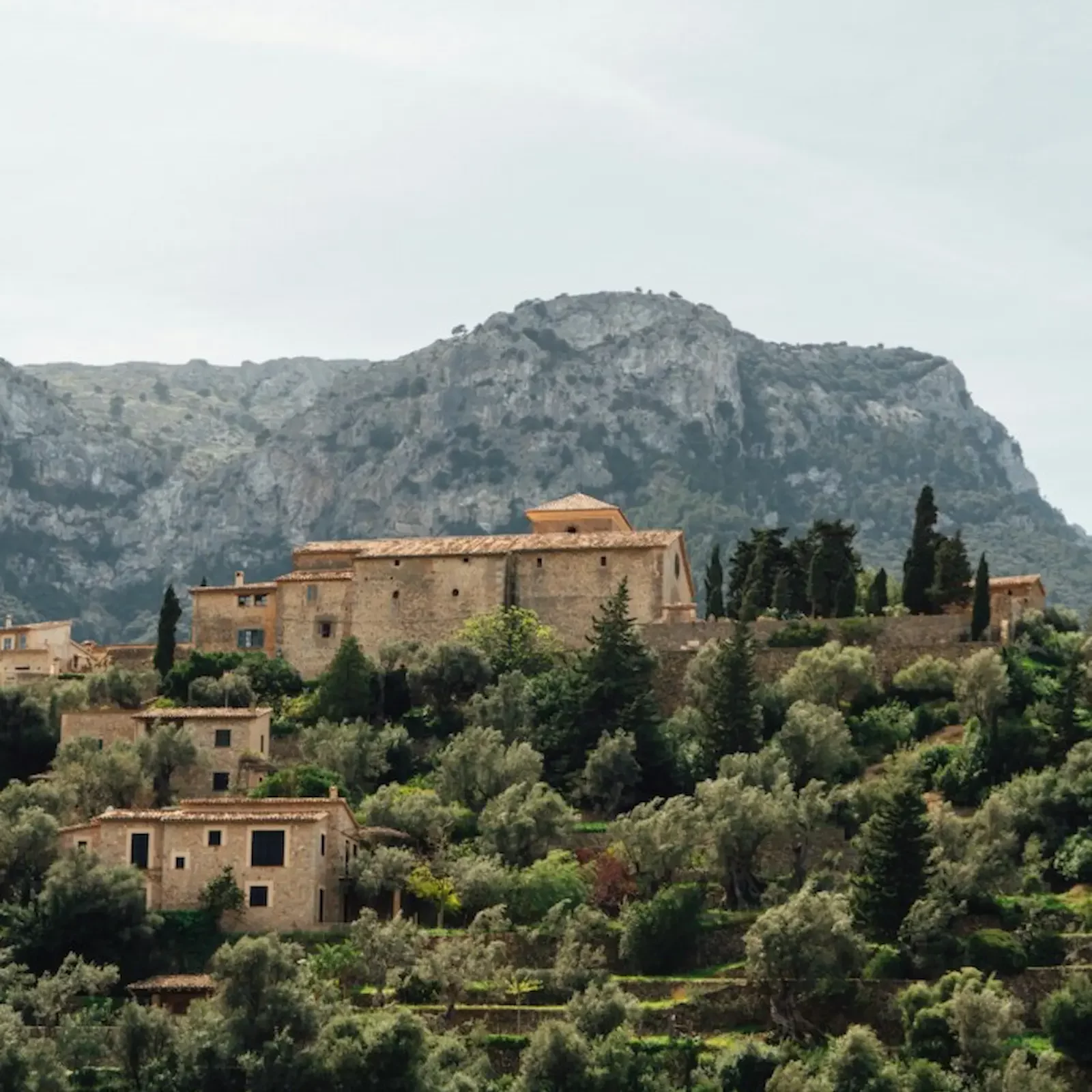
Both islands offer luxury that adapts to your rhythm, especially if you seek space, silence, and ease. Mallorca adds variety with its mountain range, long coastline, and steady flow of cultural events. Menorca centers everything on preservation, slower habits, and landscapes shaped by protected terrain. You find calm in both, though each one delivers it in its own way.
Mallorca: Refined Leisure and Effortless Access
Mallorca’s idea of tranquility comes with polish. Areas like Son Vida, often cited as one of the island’s most exclusive enclaves, blend gated estates, top-tier golf courses, and panoramic sea views. The island also hosts one of the largest collections of five-star hotels in the Balearics, and weekly villa rates commonly range between 10,000 and 30,000 euros.
Luxury here centers on convenience, and the island’s infrastructure makes that clear. Many villas offer private chefs and resort-level amenities, creating stays that feel effortless from the start.
Meanwhile, Palma’s marina ranks among the busiest in the Mediterranean, which places yacht trips, paddleboard sessions, and waterfront dinners within easy reach. Along the coast, beach clubs add another layer of comfort, giving travelers refined spaces to slow down between outings.
The island also offers quiet corners where the sea sets a slower tempo. Coastal zones such as Cala Mondragó or Cala Llombards show that Mallorca doesn’t fall short on natural beauty, and it pairs luxury with landscapes that feel genuinely Mediterranean. If you’re leaning toward a coastal stay, you can read about the best beaches in Mallorca and explore shoreline spots that might inspire your plans.
Menorca: Hidden Coves and Private Calm
Menorca approaches tranquility with intention, and the island’s landscape shapes that feeling from the start. It values discretion, space, and silence, which is why many villas sit among olive groves or above coves reached by narrow rural roads. Weekly villa rates here usually fall between 14,000 and 22,000 euros, and the island’s limited number of five-star hotels reinforces its low-density approach to luxury. These locations create a sense of immersion where nature guides the experience. Design remains understated, views stay wide open, and the overall pace encourages a slower, more restorative way of living.
Availability stays limited throughout the year, and summer dates tend to fill early. The atmosphere feels intimate, appealing to travelers who look for luxury in privacy, soft horizons, and landscapes that remain largely untouched.
If you want to understand the island more deeply, the Menorca Guide highlights places and perspectives that reveal what makes this corner of the Mediterranean feel so quietly exceptional.
Accessibility and Connections throughout Mallorca and Menorca
Travel to the Balearics splits into two clear styles. Mallorca connects quickly, offering hundreds of routes and reliable year-round schedules. This access matches the island’s scale and constant activity. Meanwhile, Menorca works at a gentler pace. Its smaller airport manages fewer flights, creating a quieter arrival that sets the tone for your stay.
| Feature | Mallorca (Palma de Mallorca Airport – PMI) | Menorca (Menorca Airport – MAH) |
| Flight Network | Nearly 400 direct routes linking major European cities and long-haul hubs. | Around 100 routes, primarily seasonal and concentrated in summer. |
| Connectivity | Large-scale infrastructure with efficient transfers and steady year-round access. | Simplified logistics, limited off-season flights, and a slower, more intimate flow of arrivals. |
Mallorca works as a true Mediterranean gateway. Its airport moves more than 33 million passengers a year, with hundreds of routes and over 240,000 annual flights. The scale shows the island’s reach, creating steady links across Europe and an arrival that feels efficient from the first step.
Menorca operates with a different sensibility. Its airport handles just over 4 million passengers a year and runs through a single terminal with 16 gates. Fewer flights keep the flow light, and the experience feels personal, quiet, and unmistakably tied to the island’s slower way of moving.
Price and Value Perspective
In Mallorca, the luxury market stretches wide. You see a broad mix of villas near marinas, golf resorts, and coastal enclaves, each designed with comfort and polished details in mind. As a result, the island offers a large price spectrum, where value depends on choice, location, and service.
Meanwhile, Menorca approaches luxury with intention. Development rules prioritize low-rise profiles, quiet estates, and landscapes with minimal visual impact. Because high-end homes are limited, exclusivity becomes part of the offering. Recent real estate guides note that the most distinguished villas often reach the several-million-euro range, reflecting a market that values authenticity, privacy, and experience over volume.
Together, these create two distinct versions of luxury. Mallorca delivers breadth and flexibility, making high-end living accessible across many settings. Menorca focuses on singularity and immersion, where scarcity enhances the sense of retreat.
Let your instincts guide you toward the island that feels like yours
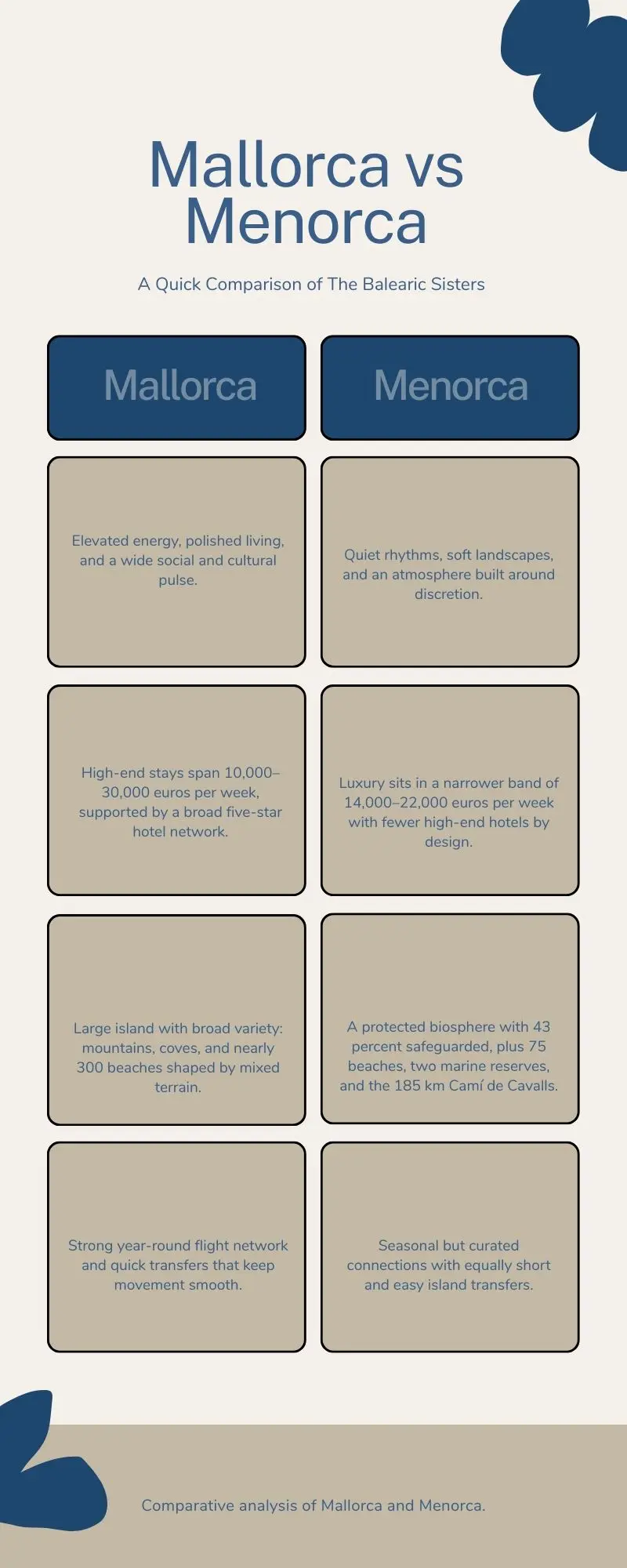
Each island offers its own kind of allure, and the choice depends on the experience you want to create. Mallorca brings scale, energy, and a wide world of sophistication at your fingertips. Menorca offers calm, landscape-led living, and a slower cadence shaped by nature.
Each island elevates a stay in its own way, and the experience changes with the landscape you choose. Mallorca leans toward sophistication and variety, while Menorca offers calm settings shaped by nature. If you want to see what each place can offer, you can browse the luxury villas in Mallorca and the luxury villas in Menorca and get a sense of which atmosphere feels right for you.